
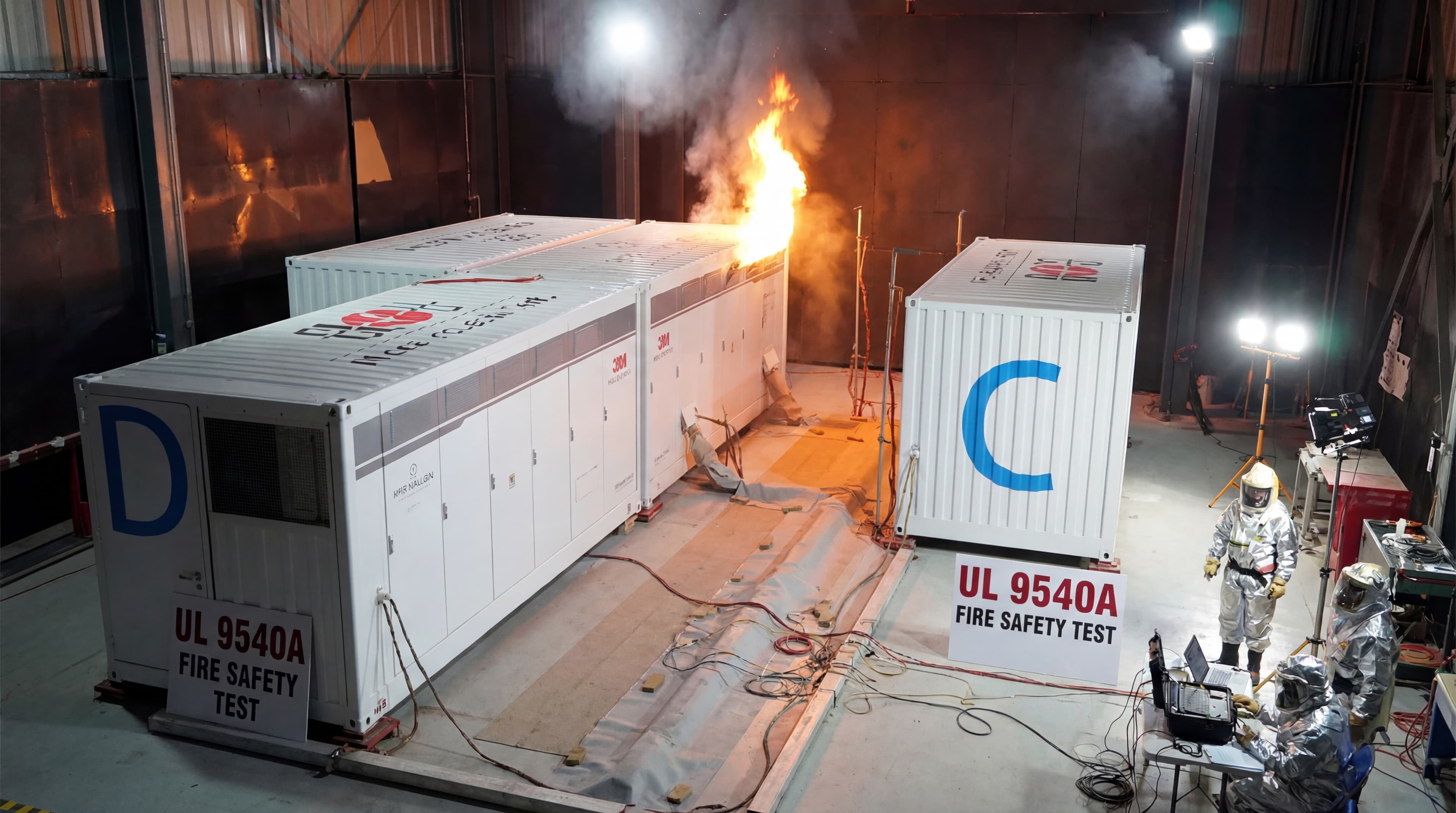
The Regulatory Landscape Is Shifting.
Systems That Can't Demonstrate Controlled Failure Behavior Are No Longer Approved.
UL 9540A, NFPA 855, and AHJ performance-based submissions are establishing a compliance environment that legacy suppression systems cannot satisfy. RFIS is designed for this environment.
Three Anchors Of The Performance-Based Safety Framework.
UL 9540A
Test Method for Evaluating Thermal Runaway Fire Propagation in Battery Energy Storage Systems
Context
UL 9540A is the definitive large-scale fire test methodology for characterizing cell-to-cell, module-to-module, and unit-to-unit thermal propagation in battery energy storage systems. It measures the actual propagation behavior of a system — not just the listed status of components.
RFIS Relevance
RFIS architecture is designed to produce the propagation limitation outcomes that UL 9540A testing evaluates. Systems with documented RFIS intervention demonstrate measurable reduction in propagation spread — producing the test evidence AHJs and insurers require.
NFPA 855
Standard for the Installation of Stationary Energy Storage Systems
Context
NFPA 855 governs the installation of stationary energy storage systems and is the primary code framework referenced by AHJs in commercial and utility ESS deployments. Its 2026 revision cycle is moving toward performance-based outcome requirements — specifically addressing propagation control.
RFIS Relevance
RFIS systems are engineered in alignment with NFPA 855's direction toward performance-based safety evidence. Naberstone's documentation framework supports AHJ submission requirements as the 2026 revision takes effect across jurisdictions.
AHJ DOCUMENTATION
Authority Having Jurisdiction — Performance-Based Submissions
Context
Authorities Having Jurisdiction increasingly require performance-based documentation for ESS and electrified infrastructure installations — moving beyond prescriptive component listing toward demonstrated outcome evidence. This shift mirrors broader trends in building code toward engineered performance.
RFIS Relevance
Naberstone's documentation framework produces the submission evidence AHJs require: propagation containment testing, sensor and response performance data, lifecycle maintenance records, and post-incident reporting. RFIS deployments are designed to be auditable from day one.
Documentation That Satisfies The Compliance Environment.
Naberstone's validation framework is built to produce the documentation evidence that AHJs, insurers, and operators need — not just at commissioning, but throughout the system lifecycle.
Qualified operators and agencies can request access to the Naberstone Validation Library — including test methodology summaries, propagation containment evidence, and AHJ submission templates.